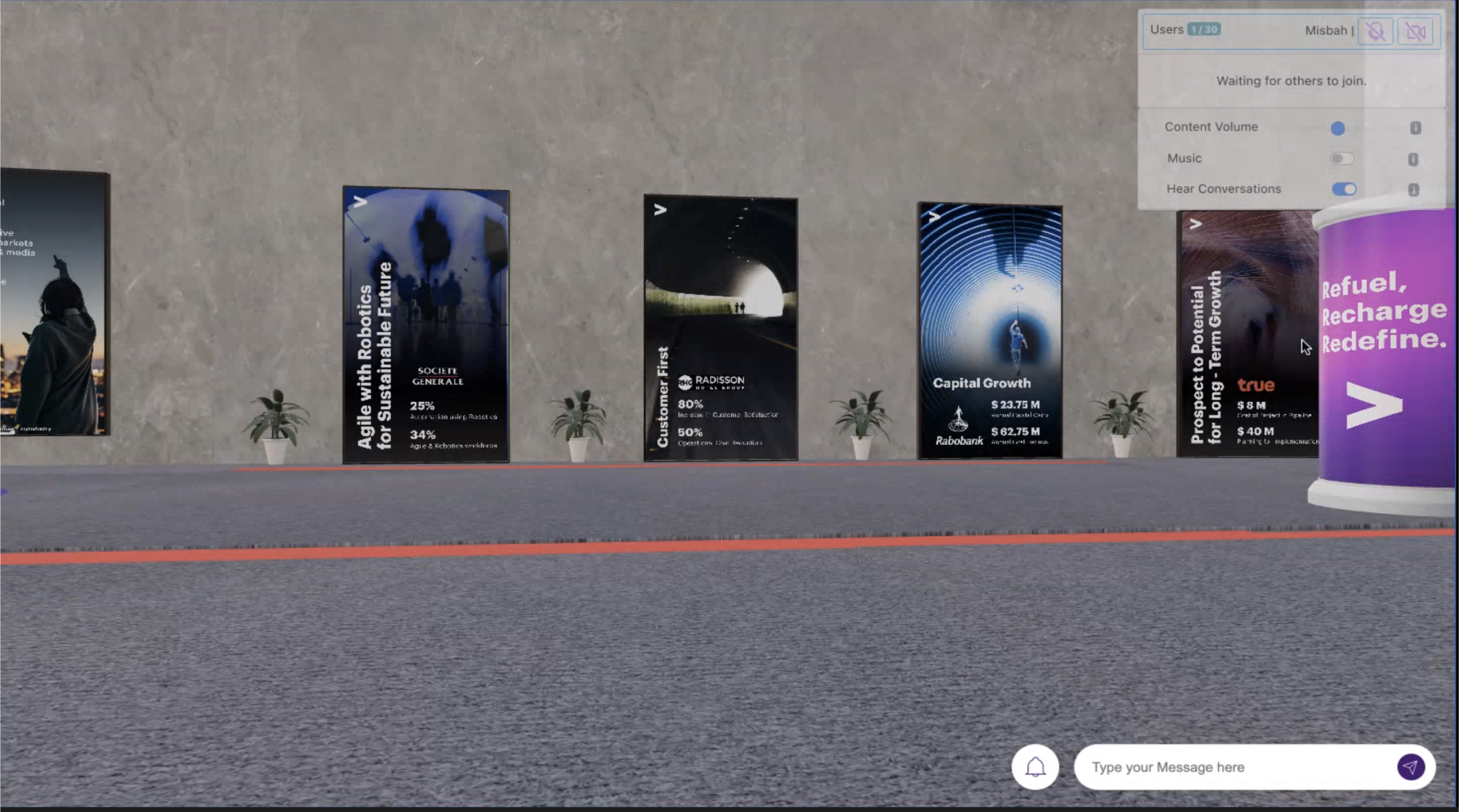
During the peak of COVID-19 in 2021, I led my first project at Accenture, focusing on creating an immersive VR experience for the Cloud First organization. This article outlines our UX strategy and process, highlighting key decisions, challenges, and outcomes.
Our team’s mission was to develop a cloud-based platform to help clients from various industries (banking, health, finance, etc.) gain a competitive advantage and improve efficiency. The platform aimed to transform organizational workflows through data and insight-driven solutions.
The primary users were industry-specific SMEs, clients, and client account leads. Our focus was on:
1. Restoring in-person connections during client visits.
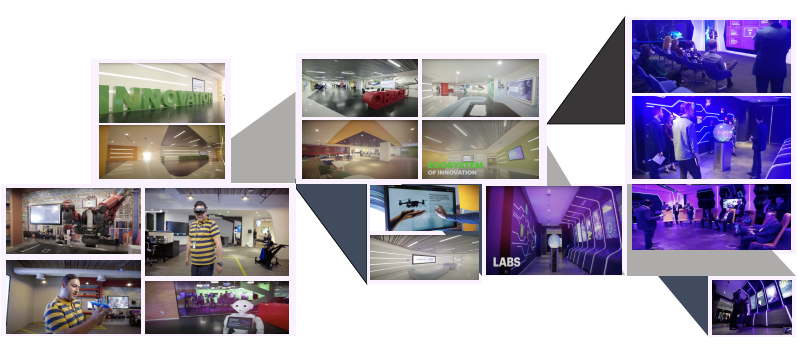
2. Providing virtual tours of the Innovation HUB (Accenture R&D space) to showcase offerings.
3. Delivering an immersive experience for users to explore, learn, and interact.
As organizations struggled with the setbacks of COVID-19, we aimed to bridge the gap between physical and virtual interactions using VR technology. This required in-depth research into how companies were coping with the pandemic and advancements in VR technology to ensure feasibility at scale.
While competitor analysis was part of our research, we also conducted direct user research. This involved interviews and surveys with actual clients and SMEs to gather insights into their needs and expectations. These insights were crucial in shaping the user experience and ensuring the solution met their specific requirements.
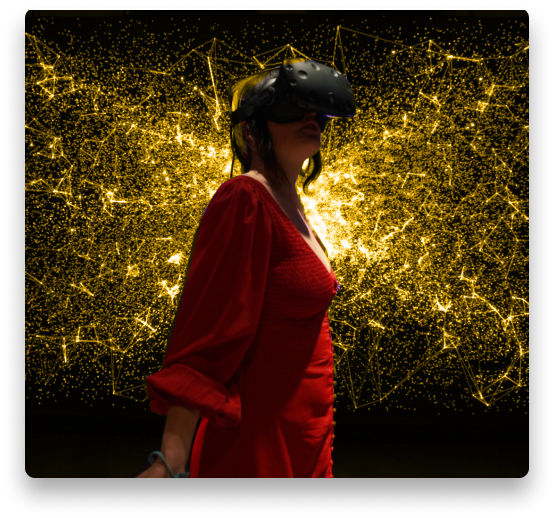
During the peak of COVID-19 in 2021, I led my first project at Accenture, focusing on creating an immersive VR experience for the Cloud First organization. This article outlines our UX strategy and process, highlighting key decisions, challenges, and outcomes.
With support from Accenture leadership, we identified internal teams capable of creating VR workspaces. We engaged in multiple discussions with these teams to explore their capabilities, understand the art of the possible, and ensure their services fit within our budget.
We brainstormed several concepts to bridge the interaction gap:
1. Book Analogy: Creating an interactive story/game.
2. Space Exploration: Using a bot to guide users through their journey.
3. Virtual Client Visit: Offering a virtual visit to the Accenture Innovation HUB, tailored to various industries.
After extensive discussions with leadership, we merged the Space Exploration and Virtual Client Visit concepts. This hybrid approach aimed to provide a comprehensive and engaging experience.
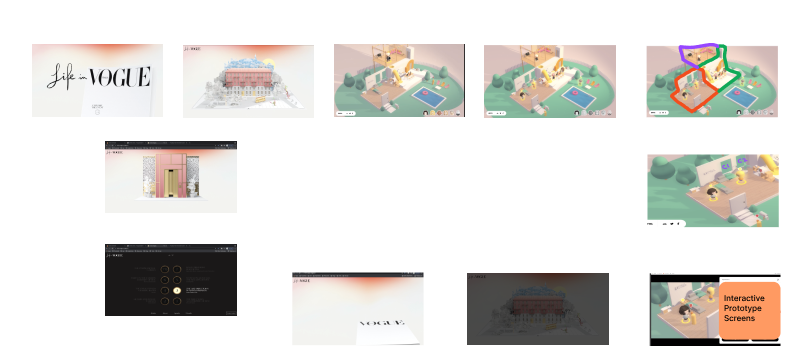
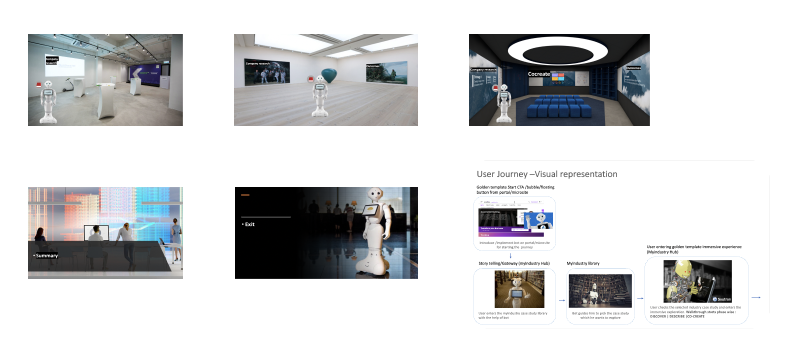
We refined the user flow iteratively, ensuring it aligned with user needs and business goals. The final user flow included the following steps:
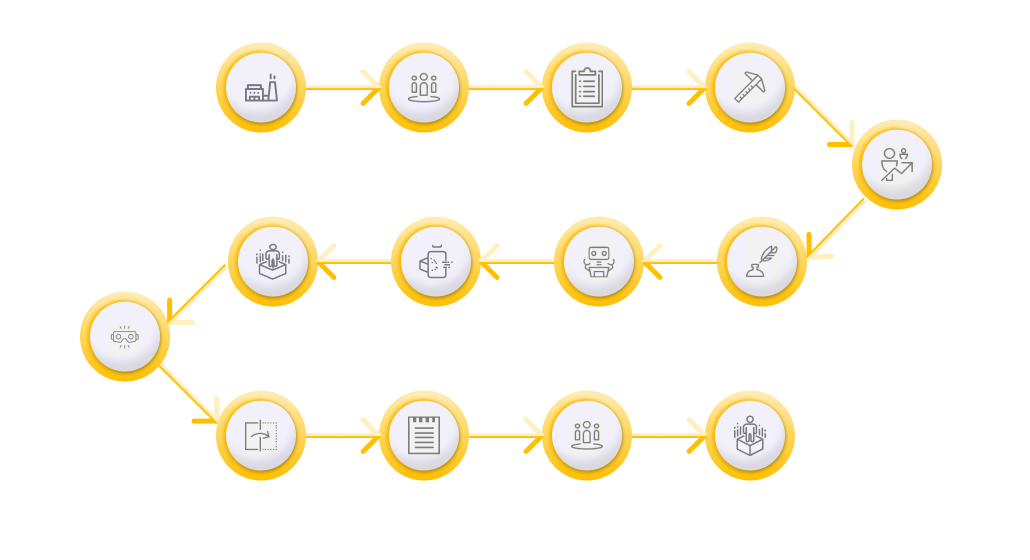
We planned the creation of the virtual environment in sprints to manage multiple parallel tasks effectively. The VR team was tasked with developing the VR assets, while we provided leadership and coordination.
We started with:
1. Environment referencing
2. Character & conversation referencing
3. Visual cues referencing (including panels)
4. Character referencing
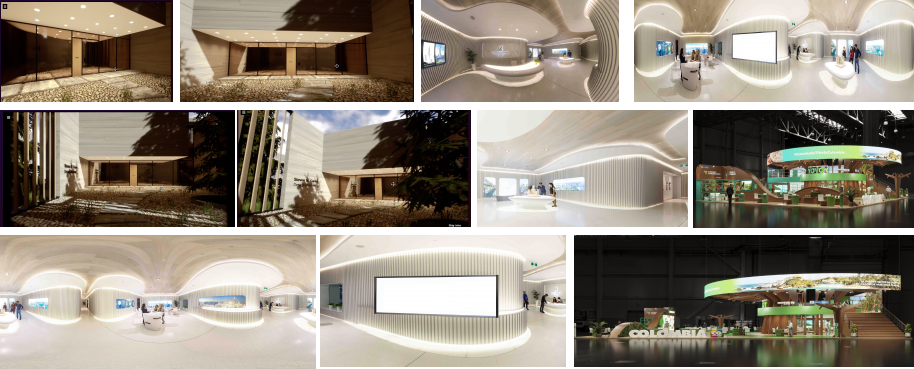
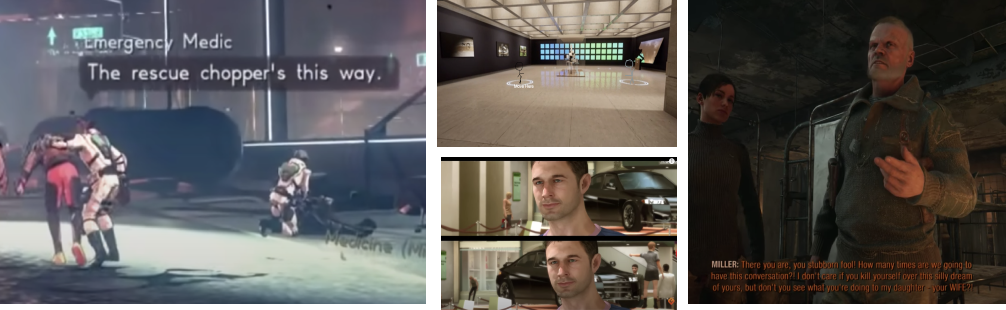
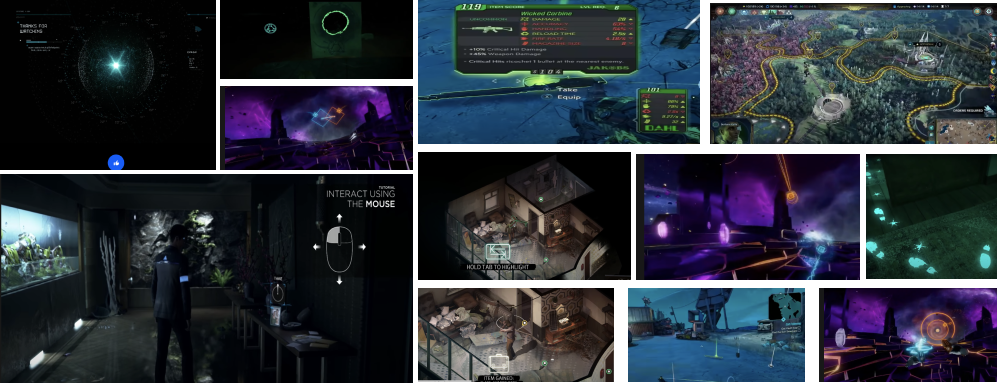
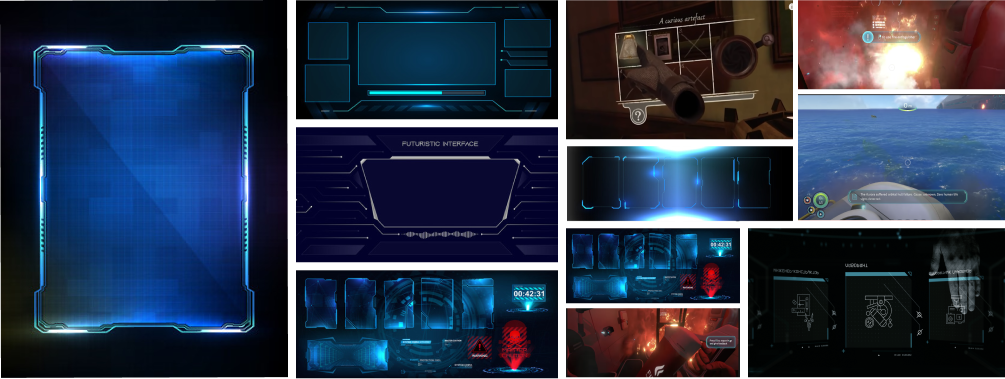
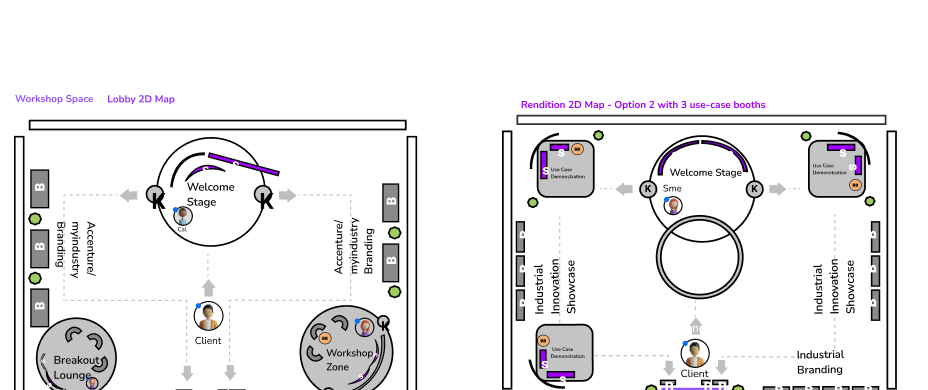
With our mood board ready, we created a 2D layout of the virtual space. After several working sessions with leadership and the VR team, we finalized the layout. The VR team then created the necessary assets for the VR environment.
We conducted a pilot test with the banking industry, organizing a demo client visit. The test was a great success, with clients engaged and impressed by the immersive, interactive space and the advanced technology Accenture leveraged. Their positive feedback validated our approach and showcased our competitive edge.
We identified several potential risks, including technical challenges, budget constraints, and potential user resistance to VR technology. To mitigate these risks, we developed contingency plans and allocated resources to address possible issues promptly.
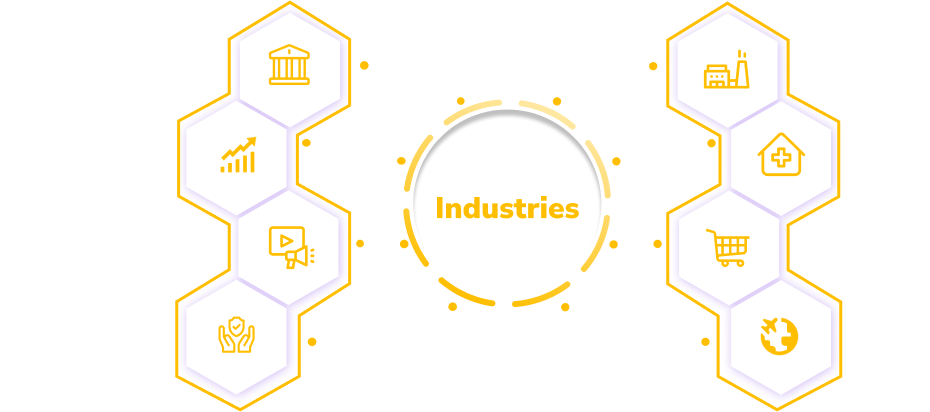
Given the pilot’s success, we planned for scaling the solution across other industries. This involved considerations for additional resource allocation, addressing technical challenges, and providing training for new users to ensure a smooth rollout.
To ensure continued engagement and effectiveness, we established a post-implementation support plan. This included regular updates, maintenance of the VR environments, and user support services to address any issues or enhancements needed.
This project demonstrated the power of innovative thinking and effective team collaboration in challenging times. By leveraging VR technology, we provided a unique and engaging solution that met the immediate needs of clients while showcasing Accenture's capabilities. The iterative, user-centric approach ensured a high-quality user experience and paved the way for future advancements in immersive technology.